Fit the lift to the interior geometry
- Access path: measure doorways, elevators, and corridors before platform height. A taller machine can still be the wrong choice if it can’t reach the work area.
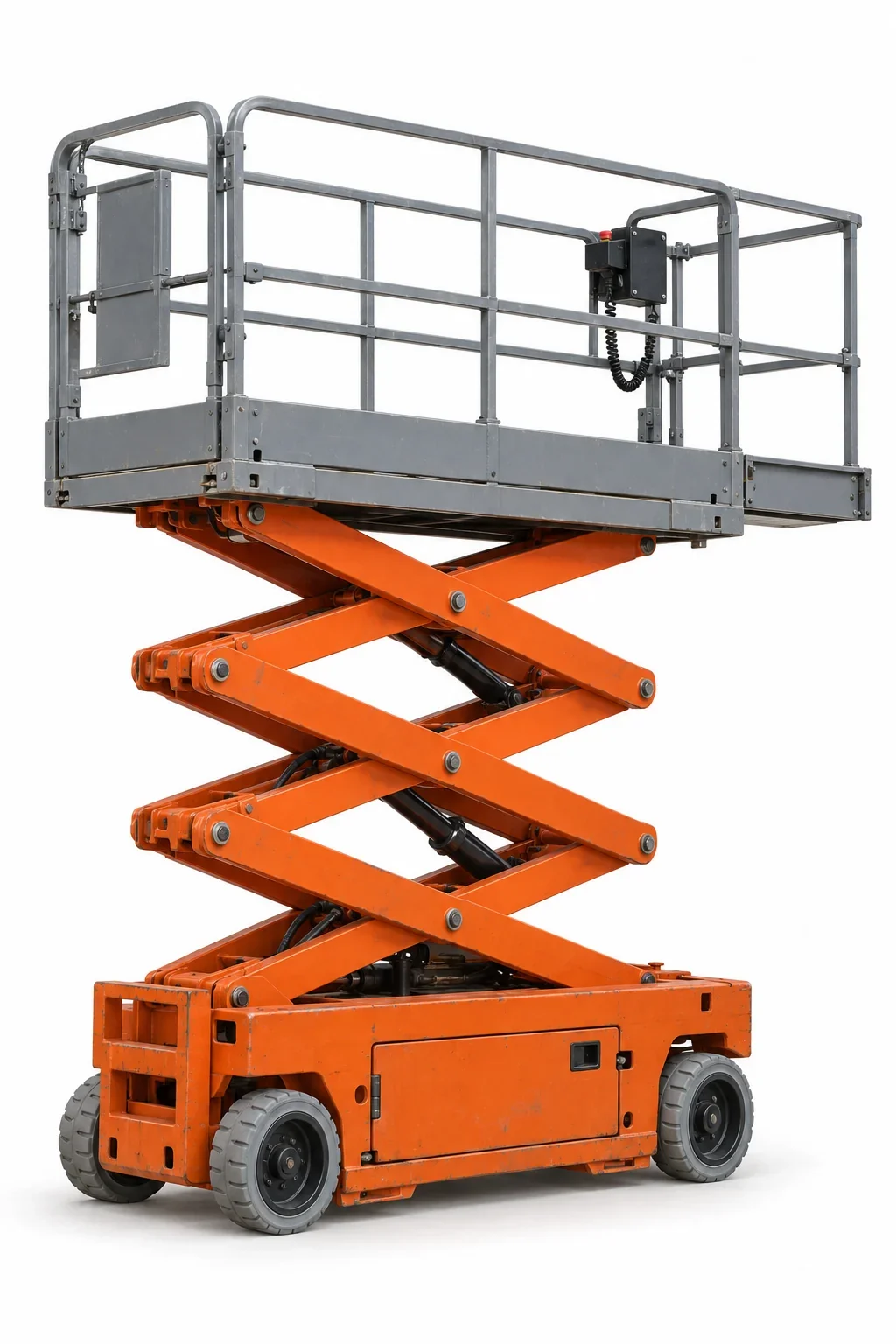
- Working height vs. footprint: pick the smallest platform that reaches the task while respecting aisle width and turning radius in local distribution buildings.
- Floor loading: verify slab ratings in older structures and mezzanines. Electric units are lighter than many outdoor machines but still concentrate weight at the wheels.
Why electric makes sense locally
- Quiet operation supports daytime maintenance in busy facilities.
- Non-marking tires and zero-emission power help protect finished interiors and sensitive areas across large institutional complexes.
- Humid summers increase heat load on batteries and motors; planning for realistic duty cycles reduces unplanned pauses during peak months.
Common South Bend applications
- Campus-ready maintenance: lamps, signage, and ceiling access where a smooth slab and low noise are required.
- Warehouse picks and safety checks: narrow-aisle work where compact width and tight steering matter more than top speed.
- Tenant improvement: buildouts in commercial interiors where ventilation for combustion units is limited.
When an electric scissor isn’t the right match
- Obstructions between the base and task: consider an articulating or telescopic boom for up-and-over reach. See /boom-lift-rental/ and /aerial-lift-rental/.
- Rough or unfinished floors: outdoor or shell spaces with debris or soft spots favor /rough-terrain-scissor-lift-rental/ instead of slab electrics.
Quick planning checklist
- Measure the highest task point and the narrowest access point.
- Confirm floor condition and slab capacity.
- Map turning clearances at corners, racking, and door swings.
Actual site conditions, the equipment’s instructions, and facility procedures govern safe operation.