Match platform geometry to the site
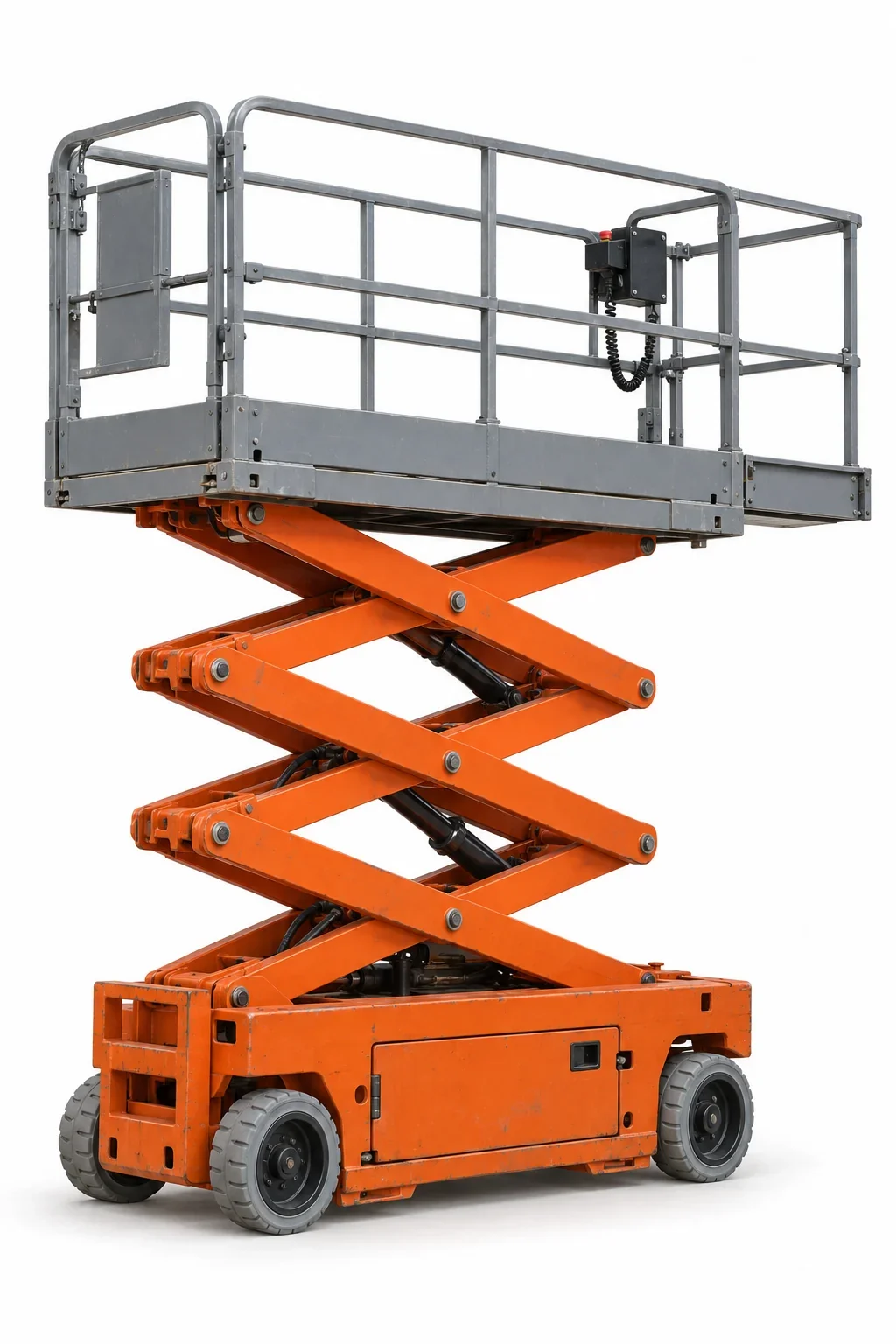
- Can the machine sit directly below the task? If yes, a rough-terrain scissor provides straight-up access with a spacious deck.
- If fencing, landscaping, or equipment blocks the base, consider reach equipment instead; see /boom-lift-rental/ or /aerial-lift-rental/.
- Platform size vs. access path: larger decks carry more materials but need wider gates and staging space.
South Bend weather and ground realities
- Lake-effect snow and freeze-thaw cycles leave ruts, crusted ice, and slick patches. Higher clearance and aggressive tires improve movement over disturbed ground.
- Spring ground softness can undermine support on lawns and fill areas. Finished pavement or compacted stone pads reduce sink risk for slab models; rough-terrain units are favored on mixed surfaces.
- Summer heat and humidity stress engines and hydraulics. Planning work windows and cool-downs helps keep outdoor cycles on schedule.
Where rough-terrain scissors excel locally
- Exterior envelope trades on new builds where surfaces are unfinished.
- Industrial sites with mixed gravel, ramps, and dock approaches.
- Signage and canopy work around large parking areas with variable plowing and runoff.
When a boom lift is the better fit
- Up-and-over geometry to clear awnings, conveyors, or pipe racks favors articulating or telescopic booms. Compare options at /boom-lift-rental/.
Quick site considerations
- Verify slope and compaction in staging areas.
- Confirm gate widths and turning space for delivery placement.
- Identify overhead hazards before selecting platform height.
Actual conditions, the unit’s instructions, and site procedures govern safe operation.